Running Ruins Your Knees — Except It Doesn't
6 min read
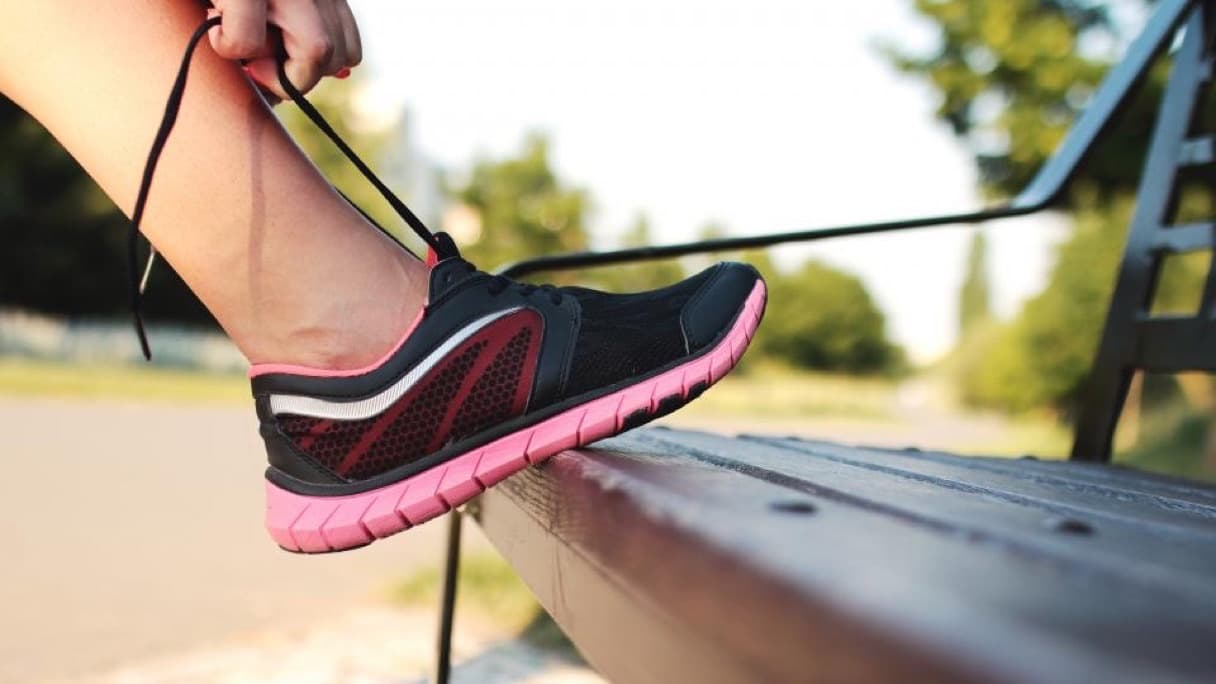
Almost every runner I meet has been warned about their knees. Usually by a relative, occasionally by a colleague who took up cycling instead, sometimes by a well-meaning health professional. The message is always the same: all that pounding will wear the joints out, and you will regret it in your sixties. It is one of the most persistent pieces of health folklore going, and the running knee damage myth puts people off one of the most accessible forms of exercise we have.
It is also, as far as the evidence goes, backwards.
The belief
Running is a repetitive impact activity. Cartilage does not regenerate well. Therefore every mile spends a little of a finite supply, and long-term runners will develop knee osteoarthritis earlier and more severely than people who do not run.
The logic is tidy. It just does not match what happens in real people.
What the evidence actually shows
Studies comparing recreational runners with non-runners have looked at this repeatedly, and the consistent finding is that recreational running is not associated with a higher rate of knee osteoarthritis. If anything, the pattern points the other way: recreational runners tend to show lower rates of hip and knee arthritis than sedentary people.
There is a caveat worth stating honestly, because I do not want to oversell it. Very high-volume competitive and elite running looks different in the data, with a somewhat higher risk, and that is likely tangled up with high training loads, competitive injuries and previous knee surgery. Previous significant knee injury, particularly a cruciate ligament rupture or a meniscal tear requiring surgery, is a genuine and well-established risk factor for arthritis later on, whether or not you run.
But for the person doing three or four steady runs a week around Sefton Park or along the Otterspool promenade, the fear is not supported. Recreational running does not appear to wear knees out.
Why cartilage likes being loaded
The intuition behind the myth treats cartilage like a car tyre: a passive surface with a fixed amount of tread. It is not. Cartilage is living tissue, and like the rest of your musculoskeletal system it responds to the demands placed on it.
Cartilage has no blood supply of its own. It is nourished by fluid moving in and out as the joint is compressed and unloaded, which means regular cyclical loading is how it gets fed. Prolonged unloading is bad for cartilage. Immobilise a joint for weeks and the cartilage thins.
Running also builds the things that protect a knee for life: stronger quadriceps and hamstrings, better bone density, better balance and a lower body weight than the same person would otherwise carry. Every one of those matters for knee health in later decades.
So where does the myth come from?
Three places, mostly.
Runners do get knee pain. Frequently. But knee pain in a runner is usually a load management problem or a tissue irritation, not accumulating structural damage, and it typically settles.
Scans find things. Imaging a middle-aged knee will very often show cartilage changes, meniscal degeneration or a small effusion. These findings are extremely common in people with no symptoms at all. Attributing them to running is a mistake of correlation, and a scan report describing wear is describing a normal ageing joint, not a running injury.
Retired elite athletes are visible. The footballer with two rebuilt knees is memorable. The thousands of parkrunners who are quietly fine at seventy are not.
What does cause knee pain in runners
Almost always, a change. More miles, more hills, faster sessions, new shoes, a return after time off, or the very common autumn pattern of ramping up for a spring event. The tissue was capable of what you were doing; it was not yet capable of what you started doing.
The usual suspects I see across Liverpool and Merseyside are patellofemoral pain at the front of the knee, iliotibial band irritation on the outside, and patellar tendon pain just below the kneecap. All three respond well to the same broad approach: temporarily reduce the aggravating load rather than stopping entirely, build strength in the hip and thigh, and rebuild the running volume gradually.
Running in a way your knees will thank you for
- Increase gradually. Add a little each week, not a lot, and take an easier week roughly every fourth week.
- Change one thing at a time. Do not add distance, hills and speed in the same fortnight.
- Strength train twice a week. Squats, lunges, step-ups, calf raises and single-leg work. This is the most protective thing runners routinely skip.
- Run at a comfortable cadence. Shorter, quicker steps generally reduce load through the knee compared with long, reaching strides. You do not need to overhaul your technique; a small nudge is enough.
- Vary the surface. Mixing pavement, park and trail spreads the load differently.
- Do not train through sharp pain. Mild, settling discomfort is usually fine. Pain that worsens through a run, or that limps you home, is a signal to back off.
If you already have knee arthritis
You may still be able to run, and for many people it is one of the better things they can do. Exercise is a first-line treatment for knee osteoarthritis, not something to be avoided with it. The approach usually needs adjusting, with more strength work, shorter and more frequent runs, and softer surfaces, but a diagnosis of arthritis is not automatically the end of running. It is worth getting individual advice rather than guessing.
When to get a knee looked at
See someone promptly if your knee locks or catches, gives way, swells rapidly after an injury, or if you cannot bear weight on it. Seek urgent medical help if the joint is hot, red, very swollen and painful, and you feel generally unwell or feverish, which needs a joint infection ruled out.
For everything else, knee pain that has not settled within a couple of weeks of sensible self-management is worth assessing. Most of what I see gets people back running rather than away from it. There is more detail on my pages for knee pain, sports injury treatment in Liverpool and sports injury rehabilitation.
If a niggle is getting in the way of your autumn training, book an assessment at /portal/book or call me on +44 7443 357020. Home visits across Liverpool and Merseyside are £90 a session, online video consultations are £60 UK-wide, evenings Monday to Friday, plus Saturday and Sunday daytimes, and you do not need a GP referral.