Padel and Racket Sports: The New Injury Wave
6 min read
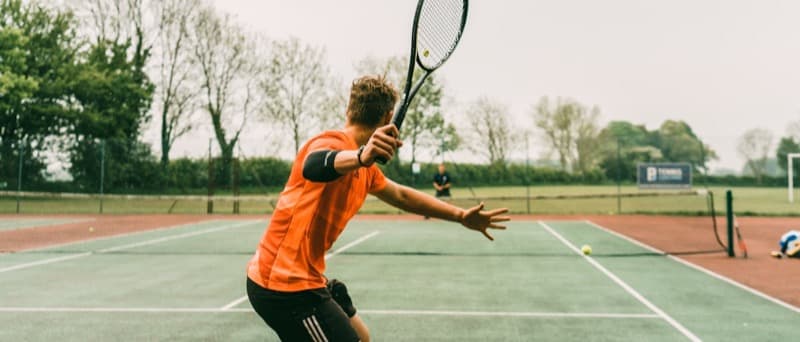
Something has shifted in my caseload over the past couple of years, and it has a very specific shape: adults in their late thirties to late fifties, generally fit-ish, generally sensible, generally not previously injury-prone, all presenting with an elbow, a shoulder or a calf. And all of them, when asked what changed, saying some version of the same sentence — "well, I started playing padel."
Padel is the fastest-growing racket sport in the country and courts have been appearing across Liverpool and the wider Merseyside area at a genuine pace. It is easy to pick up, sociable, forgiving of poor technique in a way tennis is not, and enormous fun. It is also, from a musculoskeletal point of view, a slightly sneaky sport. The barrier to entry is low. The physical demand is not.
Now that the nights are drawing in and play moves indoors for the winter, this is a reasonable moment to talk about padel injuries and what prevents them.
Why padel catches people out
Four features of the sport combine into something more demanding than it feels.
The walls. Playing the ball off the glass means points last far longer than in tennis. Rallies that would be over are not over, and you keep moving. Cardiovascular demand and total number of accelerations both go up considerably.
The overheads. Padel's signature shots — the bandeja and the víbora — are hit overhead with the arm behind the body and the trunk extended and rotated. Repeated dozens of times per session, that is a substantial demand on the shoulder and the lower back.
The surface and the stop-start. Short sprints, hard decelerations, and repeated pushing off in a confined court. Calves and Achilles tendons take a hammering, particularly on cold indoor courts in October when nobody has warmed up properly.
The player. This is the big one. Padel's demographic skews towards adults who are returning to sport rather than continuing it. Many players I see across Liverpool went from essentially nothing to three sessions a week because a friend invited them and it turned out to be brilliant. Their enthusiasm outpaced their tissue tolerance by a wide margin.
The four injuries I see most
Tennis elbow. Pain on the outside of the elbow, worse gripping, worse with a kettle or a door handle. Padel rackets are solid rather than strung, which transmits more vibration into the arm, and beginners tend to grip far too tightly. It is the single most common padel complaint I encounter and it is stubborn once established, which is why catching it early matters.
Shoulder pain. Rotator cuff related pain from repeated overheads, usually in players who hit the bandeja with the arm alone rather than driving through the legs and trunk. Aching on reaching, difficulty sleeping on that side, and a gradual loss of confidence in the overhead.
Calf and Achilles problems. Sudden calf tears — often described as feeling like being kicked from behind — and slower-onset Achilles tendon pain that is worst first thing in the morning. Middle-aged calf muscle is the classic casualty of a sport with lots of explosive first steps.
Lower back pain. From the extension-and-rotation combination in overheads, particularly in players with limited hip and thoracic spine mobility, where the lower back ends up making up the difference.
Reducing the risk without ruining the fun
Warm up for eight minutes. Not two. Padel is a sport where people arrive late, chat, and start hitting hard immediately. Jog, side-shuffle, do ten calf raises, ten squats, some arm circles, and hit gently for two minutes before playing points. Cold calves and October courts are a poor combination.
Sort your grip and racket. A grip that is too small encourages over-gripping. A racket that is too heavy or too head-heavy increases load on the elbow and shoulder. If your elbow has started grumbling, this is the first thing worth reviewing — before any exercise.
Learn the overhead properly. An hour with a coach on bandeja technique is genuinely a shoulder and back injury prevention intervention. Hitting overheads with the legs and trunk rather than the arm alone changes the load dramatically.
Build the tissue. Two short strength sessions a week does most of the work: heavy slow calf raises off a step for the Achilles, wrist extensor work with a light dumbbell for the elbow, and external rotations plus rows for the shoulder. Three sets of ten each, twice weekly, twenty minutes total.
Progress the volume gradually. If you have just discovered padel, go twice a week for a month before you go three times. Fitness improves faster than tendons adapt, and almost every overuse injury I treat is a consequence of that gap rather than of bad technique.
What to do when something goes
For an elbow or a shoulder that has started aching, do not simply play through it and hope. Early-stage tendon problems respond well to modified load and a targeted programme. Late-stage ones take months. The difference between those two scenarios is usually whether somebody acted in week two or in month five.
For a sudden calf injury — a sharp pain mid-calf, difficulty pushing off — stop immediately, and expect a graded return over weeks rather than days. Returning too early is the most reliable way to tear it again.
Please seek urgent medical assessment if you have calf pain with swelling, warmth and redness, particularly after a long flight or period of immobility, as that can indicate a blood clot rather than a muscle injury. Likewise if you felt a sudden snap at the back of the ankle and cannot push off at all, get seen the same day — a ruptured Achilles needs prompt attention.
The point of all this
I am not trying to talk anybody out of padel. It gets people moving, it is genuinely sociable, and I would far rather treat an occasional elbow than see somebody do no exercise at all. But a sport that feels easy while being physically demanding deserves a bit of preparation, and most padel injuries I see were entirely avoidable with twenty minutes a week of the right work.
If you have picked up an elbow, shoulder or calf problem on court, my sports injury rehabilitation approach is built around returning you to the actual sport, not just to comfortable walking. There is more on sports injury physiotherapy across Liverpool, and on shoulder injury specifically, if either is your problem.
Book an assessment at /portal/book or call me on +44 7443 357020. I do home visits across Liverpool and Merseyside at £90 a session, or online consultations at £60 — and for racket sport problems, where a lot of the work is technique, loading and progression, online often does the job perfectly well.