Netball and Basketball: Landing Mechanics That Save Knees
6 min read
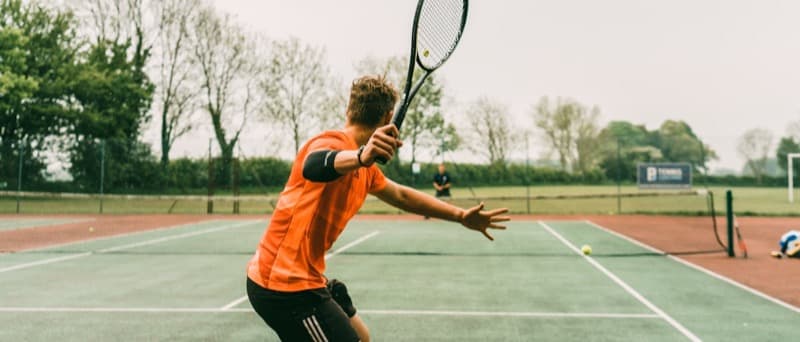
The netball and basketball seasons are starting up again across Merseyside, which means the next few weeks will bring a familiar pattern into my diary. Not gradual, grumbling overuse problems — those come at Christmas. Right now it is the sudden ones. The landing that went wrong. The change of direction that did not.
Netball knee injuries have a reputation, and unusually for sporting reputations, it is deserved. Both netball and basketball combine repeated jumping, hard deceleration, sharp cutting and landing on one leg, often while looking somewhere other than where you are landing. That is a demanding combination for a knee, and it is why these two sports appear so consistently in anterior cruciate ligament injury statistics.
The encouraging part is that landing is a skill. Skills can be coached. And the evidence that they can be coached — that structured neuromuscular training meaningfully reduces knee injury rates in these sports — is among the more convincing bodies of research in sports medicine.
What actually goes wrong
The ACL. The classic mechanism is not a collision. It is a non-contact injury: landing or pivoting with the knee collapsing inward, the foot planted, the body rotating over it. Often there is an audible pop, immediate swelling within a few hours, and a knee that feels like it cannot be trusted. ACL injuries are considerably more common in female athletes than male, and netball's combination of the footwork rule and repeated single-leg landings puts it squarely in the high-risk category.
Ankle sprains. The most common injury in both sports by a distance. Usually landing on somebody else's foot in a contested rebound or under the post.
Patellofemoral pain. The slow one. Pain at the front of the knee, worse going downstairs, worse sitting for long periods, worse after training volume jumps. Very common in the first month of a season when the body meets a workload it has not seen since spring.
Fingers. Netball and basketball are hard on hands. A finger that is deformed, cannot be straightened, or has lost its ability to bend at the end joint needs assessment rather than taping to its neighbour and hoping.
Why the knee gives way
Three things, and they interact.
The first is knee valgus — the knee travelling inward over the foot on landing. It reflects the hip's inability to control rotation, more than anything wrong with the knee itself. The knee is usually the victim, not the culprit.
The second is landing stiffly. A landing with the knees and hips barely bending gives the joint no time to absorb force. Soft landings distribute load through muscle over a longer window; stiff landings dump it into ligament in an instant.
The third is attention. Almost every serious knee injury I see from these sports happened while the player was watching the ball, an opponent, or the umpire. Controlled landing in a drill does not automatically survive contact with a real game where nobody is looking at their feet.
Coaching a better landing
You cannot think your way to a good landing in the eleventh minute of a match. It has to be trained until it is default. Three cues do most of the work.
Land quietly. The single most useful instruction I give. Noise is a proxy for impact. If your landing thuds across the sports hall, you are absorbing force badly, and telling somebody to be quiet fixes more mechanics in one sentence than a paragraph of anatomy.
Knees over toes, not inside them. Have a teammate film you from the front doing five drop landings from a bench. Watch it back. If the knees drift inward on contact, you have found your priority.
Land on the ball of the foot, then let the heel come down. Toe-only landings load the calf and Achilles heavily and leave nothing in reserve. Flat-footed landings deliver the impact straight up the chain.
The warm-up that earns its place
Injury prevention programmes work when they are done consistently — twice a week, in season, as part of the warm-up rather than as homework nobody does. Fifteen minutes. Structured neuromuscular warm-ups combining running, strength, plyometrics and balance are recommended in sports medicine guidance, and the netball-specific and basketball-specific versions all share the same skeleton:
- Running and cutting — build from jogging to sharp changes of direction, decelerating under control rather than skidding.
- Strength — Nordic hamstring curls, single-leg squats and calf raises. The hamstrings act as a brake on the exact force that stresses the ACL.
- Plyometrics — squat jumps progressing to single-leg hops, landing quietly, holding each landing for a full second before the next repetition.
- Balance — single-leg holds, then with a ball pass, then with eyes tracking a teammate rather than the floor.
That last progression matters most and is skipped most. Balance with your eyes on your own foot is a different task from balance while receiving a pass at pace.
Load, not just technique
The other half of the picture is workload. Late September is when players go from a summer of very little to three sessions and a match a week overnight. Tendons and bone adapt more slowly than fitness improves, which is why front-of-knee and shin pain cluster in the first month of a season.
Build up over three to four weeks rather than starting at full volume, and be honest about whether you did anything over the summer. Anyone returning from a break — and I see plenty of people coming back to club netball across Liverpool in their thirties and forties — should treat the first month as preparation rather than performance.
What to do if the knee goes
If you feel a pop, the knee swells within a few hours, or it gives way when you try to weight-bear, stop playing. Do not return to court that day, whatever the score. Get it assessed. A knee that swells rapidly after a twisting injury has a meaningful chance of significant internal damage, and playing on risks turning a repairable problem into a more complicated one.
Seek urgent medical attention if you cannot bear weight at all, if the knee is visibly deformed, or if you have numbness or coldness in the foot.
For everything else, early assessment shapes the outcome. I cover knee pain in more detail elsewhere, and if you want a structured return to court, my sports injury rehabilitation work is built around getting people back to their actual sport rather than back to walking comfortably. You can also read about sports injury physiotherapy in Liverpool more generally.
If you have picked something up in the opening weeks of the season, or you would like your landing mechanics assessed before you do, book at /portal/book or call me on +44 7443 357020. I visit players at home across Liverpool and Merseyside, weekday evenings and weekend daytimes, which tends to fit around training better than clinic hours do.