What's That Pins-and-Needles Feeling in My Hands?
7 min read
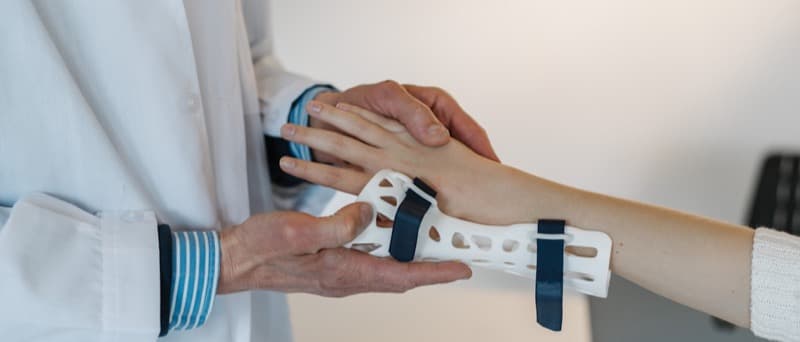
Pins and needles in the hands nearly always means a nerve somewhere along its route is being compressed, stretched or irritated. That route is long — it starts in your neck, travels through the shoulder, down the arm, past the elbow and through the wrist before reaching your fingers — so the trouble can be anywhere along it. The reassuring part is that in the majority of cases it is mechanical, identifiable and treatable. The part that deserves respect is that a small number of causes need medical attention rather than physiotherapy.
So let me answer the question plainly first, then give you the nuance, because which fingers tingle turns out to be far more informative than most people expect.
Why nerves tingle at all
Nerves need two things: space and blood supply. Squash a nerve, or reduce the tiny blood vessels that feed it, and it starts misfiring. That misfiring is what you experience as tingling, buzzing, a hand that feels swollen when it is not, or the sensation of wearing an invisible glove.
This is also why symptoms are so often worse at night. Many of us sleep with wrists curled or elbows fully bent, which narrows the tunnels nerves pass through, and there is no movement for hours to relieve it. Waking at three in the morning shaking a dead hand is one of the most recognisable patterns in clinical practice.
Which fingers? The map matters
Each nerve supplies a specific territory. Where you feel pins and needles in the hands usually tells us which nerve is involved and therefore where to look.
Thumb, index, middle and half the ring finger — the median nerve. Most commonly compressed at the wrist, which is carpal tunnel syndrome. Typically worse at night and with sustained gripping, driving or holding a phone. People often describe shaking the hand out to relieve it.
Little finger and the other half of the ring finger — the ulnar nerve. Usually irritated at the inside of the elbow, in what is called the cubital tunnel. Classically worse with the elbow bent for long periods: phone calls, sleeping curled up, leaning on a desk edge.
Back of the hand and the web between thumb and index finger — the radial nerve. Less common, often related to sustained pressure or after an awkward sleeping position.
A whole-arm band, or symptoms that follow a stripe down the arm — more likely coming from a nerve root in the neck, referred to as cervical radiculopathy. This often comes with neck or shoulder blade pain and may change with neck position.
Both hands together, especially with the feet involved too — this pattern points away from a local mechanical cause and towards something systemic, and belongs with your GP rather than with me first.
The usual mechanical culprits
In Merseyside I see the same few patterns repeatedly. Carpal tunnel symptoms in people doing long hours of repetitive gripping, and in pregnancy, where fluid retention narrows the tunnel. Ulnar symptoms in desk workers who lean on their elbows and in cyclists gripping bars for hours. Neck-related arm symptoms in people who have had a stiff, achy neck for months and then developed tingling.
There is also a group where nothing is compressed at all and the arm is simply sensitised — after a period of stress, poor sleep or an unaccustomed increase in load. Those cases behave differently: symptoms move around, do not respect a nerve map neatly, and settle well with graded activity and reassurance.
What an assessment involves
You do not need a scan to get a sensible answer to this. A careful history usually gets us most of the way — when it started, what provokes it, whether it wakes you, whether your grip has changed, what your work and hobbies demand of your arms.
Then I test. I check sensation across each nerve territory, test the strength of specific muscles supplied by each nerve, examine your neck movement and how it alters your symptoms, and use specific tests that load or release each nerve at the wrist, elbow and neck. Between those, we can usually localise the problem to one level with reasonable confidence.
Where symptoms are clearly nerve-related and have been present for months, or where there is measurable weakness, nerve conduction studies via your GP may be appropriate — but they come after a clinical assessment, not instead of one.
What actually helps
Most mechanical nerve irritation improves with a combination of the following.
Removing the aggravating position. This sounds obvious but it is where most of the benefit comes from. A neutral wrist splint at night for carpal tunnel symptoms is genuinely effective and inexpensive. For ulnar symptoms, a towel loosely wrapped round the elbow at night to stop it fully bending, and taking your elbows off hard desk edges, often does most of the work.
Nerve gliding exercises. Gentle, specific movements that let the nerve slide within its sheath rather than being pulled taut. These need to be done correctly and to the right dosage — pushed too hard, they reliably make symptoms worse for a day or two.
Addressing the neck and shoulder girdle where the source is higher up, including mobility work and strengthening the muscles that support the shoulder blade.
Graded loading rather than complete rest. Nerves do not like being immobilised any more than muscles do.
Where carpal tunnel symptoms are severe or long-standing, an injection or surgical decompression can be very effective, and I will say so plainly rather than persist with conservative treatment that is not working. A musculoskeletal physiotherapy assessment should tell you which category you are in.
When to seek medical help urgently
Please do not wait for a physiotherapy appointment if any of these apply.
- Sudden numbness or weakness on one side of the body, facial droop, or difficulty speaking. Call 999 — this is a stroke until proven otherwise.
- Progressive weakness, visible muscle wasting, or dropping objects. This suggests a nerve under sustained pressure and needs prompt assessment.
- Clumsy hands together with an unsteady walk or changes in bladder or bowel control. This can indicate pressure on the spinal cord itself and needs urgent medical review.
- Pins and needles in both hands and both feet, particularly with known or suspected diabetes, thyroid problems, B12 deficiency or heavy alcohol use. See your GP for blood tests.
- Symptoms following significant trauma, or accompanied by fever, unexplained weight loss or a history of cancer.
- Arm tingling with chest tightness, breathlessness or jaw pain. Treat as cardiac and call 999.
Short of those, occasional pins and needles that resolve when you change position are rarely sinister — but symptoms present most days for more than a few weeks are worth assessing, because early nerve problems respond far better than established ones.
If that is where you are, I see patients at home right across Liverpool and Merseyside, and you can read more about how I work at physiotherapy in Liverpool. Book at /portal/book or call me on +44 7443 357020. Home visits £90 per session, online consultations £60 UK-wide, evenings Monday to Friday, plus Saturday and Sunday daytimes, no GP referral needed.