Hip Mobility Routine for Stiff Mornings
7 min read
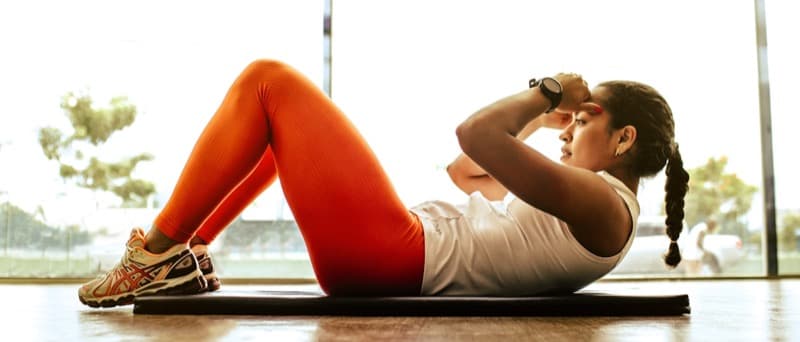
There is a particular walk people do to the bathroom in the first minute of the morning, and I hear about it constantly once the weather turns. Hips that felt fine at ten o'clock last night are stiff, gripping and reluctant at seven this morning, and it takes twenty minutes of shuffling about before things loosen off. As the autumn mornings get colder across Liverpool, this is the complaint that reliably starts appearing in my diary again.
The good news is that morning hip stiffness usually responds very well to a short, targeted routine. Below are five hip mobility exercises I prescribe regularly, in the order I would do them, with sets, reps and the form cues that make the difference between a stretch that works and one that just irritates.
Why hips feel stiff first thing
Overnight you are still for hours. Joint fluid becomes more viscous, tissues settle into a shortened position, and the sensitivity of the area tends to be higher after a long spell without movement. That combination produces stiffness that eases as you move — which is the important detail. Stiffness that loosens within ten or fifteen minutes of getting going is the common, mechanical kind, and it is exactly what mobility work is for.
The other contributor is what you did yesterday, or rather what you did not do. Hips that spend nine hours flexed at a desk and eight more flexed in bed never visit the ends of their range, and range you do not use is range you gradually stop tolerating comfortably.
Before you start
Two safety rules. Stop on sharp pain — a strong stretch sensation or mild ache is fine, but sharp, shooting or pinching pain means stop and reduce the range. And no forcing or bouncing; mobility responds to patient, repeated movement, not to being wrestled. Some soreness the next day is acceptable if it settles within twenty-four hours; symptoms worse for two days mean you did too much.
The whole routine takes about eight minutes and can be started in bed if getting to the floor is the hard part.

The routine
1. Lying hip rotations
Lie on your back with knees bent and feet flat, roughly hip-width apart. Let both knees fall slowly to one side as far as is comfortable, keeping both shoulders down, then take them across to the other side. 2 sets of 10 each way.
Form cue: think slow and rhythmic, like a metronome, rather than a held stretch. This is a mobiliser to wake the joint up. It can be done in bed before you get out of it, which is often when it is most valuable.
Progression: pause for three seconds at the end of each side once the movement feels easy.
2. Single knee to chest
Still on your back, draw one knee gently towards your chest with your hands behind the thigh, until you feel a comfortable stretch at the back of the hip. Hold for 20 to 30 seconds, 2 to 3 repetitions each side.
Form cue: keep the opposite leg relaxed and long. If your lower back complains, bend the other knee and put that foot flat.
Regression: hold behind the thigh rather than over the shin if the knee is sensitive.
3. Half-kneeling hip flexor stretch
Kneel on one knee with the other foot flat in front, both at about ninety degrees. Use a cushion under the kneeling knee. Before you move, tuck your tailbone underneath you — flatten the arch of your lower back slightly. Then shift your weight gently forwards until you feel a stretch at the front of the hip and thigh of the kneeling leg. Hold 30 seconds, 2 to 3 repetitions each side.
Form cue: the tailbone tuck is the entire exercise. Without it most people simply arch their lower back and feel nothing useful at the hip.
Progression: raise the same-side arm overhead and lean slightly away from the kneeling leg.
4. Glute bridge
Back on the floor, knees bent, feet flat and about a hand's width from your buttocks. Push through your heels and lift your hips until your body forms a straight line from knees to shoulders. Squeeze the buttocks at the top, hold for two seconds, then lower with control. 2 to 3 sets of 10 to 12.
Form cue: initiate with the buttocks, not the lower back. If you feel it mostly in your hamstrings, bring your feet slightly closer; if you feel it in your lower back, you are arching rather than extending the hip.
Progression: pause for five seconds at the top, then progress to single-leg bridges with the opposite knee held towards the chest.
5. Seated 90/90 rotations
Sit on the floor with one leg in front of you bent to ninety degrees and the other out to the side, also bent to ninety. Keeping your chest tall, rotate both legs across to the other side so the positions swap, using your hands behind you for support. 2 sets of 8 to 10 rotations.
Form cue: move slowly and stop where you can still keep your chest up. Most people can only manage half the range at first, and that is the point.
Regression: if the floor is not accessible, sit on a chair and cross one ankle over the opposite knee, letting the knee drop out to the side, holding 30 seconds each.
Making it work
Consistency beats intensity every single time. Six minutes daily will outperform forty minutes on a Sunday, and mornings are the natural slot because that is when your symptoms are.
Give it three to four weeks before judging it. Mobility gains are real but unhurried, and the first change most people notice is not extra range — it is that the stiff period after waking gets shorter. Add general strength work alongside it too, because hips that are strong through range hold their mobility better than hips that are only stretched.
When stiffness means something else
Book an assessment if the stiffness is not improving after a month of consistent work, if you have pain deep in the groin that worsens with weight-bearing, if you are limping, or if symptoms travel down the leg, which can point towards the back rather than the hip.
See your GP rather than a physiotherapist if morning stiffness routinely lasts more than half an hour, improves with exercise but not with rest, wakes you in the second half of the night, or comes with other joint swelling, rashes, eye inflammation or bowel symptoms — that pattern can indicate inflammatory joint disease and needs medical assessment. Seek urgent help for a hot, swollen joint with fever, an inability to bear weight after a fall, or sudden severe groin pain.
Want it tailored?
A generic routine helps a lot of people, but if yours is not shifting it is usually because one specific structure needs targeting. I see patients at home across Liverpool and Merseyside at £90 a session, and online UK-wide at £60, evenings Monday to Friday, plus Saturday and Sunday daytimes. Book at /portal/book or call +44 7443 357020, or read more on my musculoskeletal physiotherapy and Liverpool physiotherapy pages.