Golfer's Elbow: Why the Inside of Your Elbow Hurts
5 min read
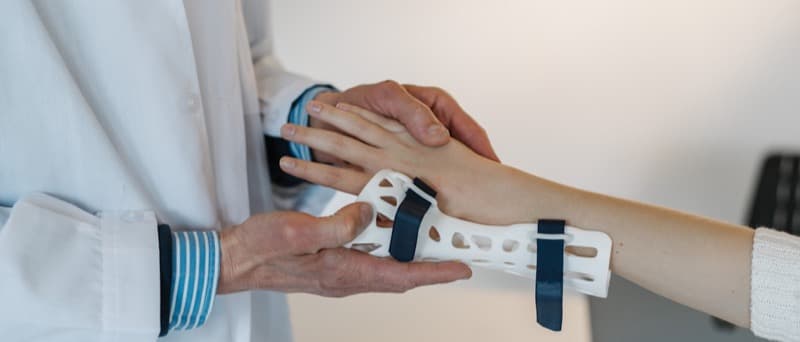
Despite the name, most people I treat for golfer's elbow have never swung a club in their lives. Gardeners, gym-goers, plumbers, desk workers, climbers — the inside of the elbow does not care how the overload arrived, only that it did. If you have a nagging ache on the inner side of your elbow that bites when you grip, lift or shake hands, this one is for you. Here is what golfer's elbow actually is, why it happens, and how physiotherapy helps it recover properly.
What is golfer's elbow?
Golfer's elbow — medial epicondylitis, or more accurately medial epicondyle tendinopathy — affects the tendon on the inner (little-finger side) bump of your elbow, where the muscles that flex your wrist and fingers attach. It is the mirror image of tennis elbow, which affects the outer side.
The "-itis" name is misleading: this is rarely a hot, inflamed tendon. Research shows tendinopathy is better understood as a tendon whose structure has changed after being loaded beyond its current capacity — usually gradually, through repetition rather than one dramatic incident. That distinction matters, because it changes the treatment entirely: you cannot rest your way out of it.
Symptoms to look for
- Aching or sharp pain on the inner elbow, sometimes spreading down the forearm
- Pain on gripping — handshakes, jars, kettlebells, carrier bags, dumbbells
- Discomfort when flexing the wrist or turning the forearm, such as using a screwdriver
- Morning stiffness in the elbow that eases as you get moving
- Weakness of grip on the affected side
One important check: if you have pins and needles or numbness in your ring and little fingers, that suggests the ulnar nerve — which runs right beside this tendon — is involved, and it changes the management. It is one of the first things I screen for.
Why it happens
Golfer's elbow is a capacity problem: the load going through the tendon has exceeded what it is currently conditioned to handle. Common stories I hear across Liverpool and Merseyside include a new gym programme heavy on pull-ups and rows, a weekend of unaccustomed DIY or gardening, a busy season of racquet sports or golf, a manual job that suddenly got busier, and even long hours of gripping a mouse and typing. Often it is the change in load rather than the total amount — tendons dislike surprises far more than they dislike hard work.
How I assess it
Diagnosis is largely clinical, which means a scan is rarely needed. In an assessment I take a detailed history of how the pain behaves and what changed in the months before it started, then test the tendon directly — resisted wrist and finger flexion, grip strength, palpation of the attachment. Just as importantly, I check your neck and shoulder, because pain on the inner elbow can be referred from further up the chain, and I screen the ulnar nerve. Then we look at the whole picture: your training, work, sleep and overall load, because that is where the answer usually lies.
Evidence-based treatment
The treatment with the best evidence for tendinopathy is progressive loading — exercise that starts at a level the tendon tolerates and builds systematically. A typical plan through my musculoskeletal physiotherapy service looks like this:
- Calm it down: temporarily modify (not eliminate) the aggravating activities, often with simple tweaks to grip width or technique
- Isometric holds: static wrist-flexion holds that settle pain and start loading the tendon early
- Progressive strengthening: wrist flexion with a light dumbbell, building load over weeks, then grip and forearm rotation work
- Return to sport or work: graded reintroduction of pull-ups, golf, tools or typing volume
Honesty matters here: tendinopathy recovers over weeks to months, not days, and the tendon usually grumbles a little during good rehabilitation — mild pain that settles within a day is acceptable and even useful. Injections have limited long-term evidence for this condition and are not a first-line option; loading is.
What you can do yourself
Keep using the arm within comfort, shrink the aggravating loads rather than abandoning them, and try a simple isometric: squeeze a rolled-up towel firmly for 30 seconds, five repetitions, once or twice daily, keeping pain mild. Warm the forearm before demanding tasks. Stop on any sharp pain, and see a doctor promptly if the elbow is hot, red and swollen, if pain follows a distinct pop or injury, or if numbness and weakness in the hand are progressing — those need medical review rather than a loading programme.
When to get it assessed
If your inner elbow has been complaining for more than a few weeks, is affecting work, training or sleep, or keeps relapsing every time you get back to the gym, a structured plan will save you months of frustration. I provide physiotherapy across Liverpool and Merseyside as home visits (£90), and golfer's elbow also rehabilitates very well through online consultations (£60, UK-wide) — it is an exercise-led condition, and technique coaches beautifully over video.
Book evenings Monday to Friday, plus Saturday and Sunday daytimes, at /portal/book or call +44 7443 357020 — no GP referral needed.